Nobody wants to hear that a wall has to come down. We would rather repair one too, because a repair is a smaller job and an easier conversation. But a wall is a structure, and some symptoms are cosmetic while others are the wall telling you it has already failed and is just taking its time about it.
Read the symptom
| What you see | What it usually means | Honest answer |
|---|---|---|
| A few loose or shifted caps | Adhesive let go, or frost lifted the top course | Repair. Straightforward |
| Staining or efflorescence on the face | Water is passing through the block | Cosmetic, but check the drainage behind it |
| One localised low or sunken section | A base problem confined to one area | Often repairable. Rebuild that section |
| The wall leans outward at the top | Pressure behind it exceeded what it was built for | Usually rebuild. Straightening the face does not fix the cause |
| A bulge in the middle of the run | Backfill and water pushing out, base likely inadequate | Rebuild |
| Joints opening up along the length | The wall is moving as a whole | Rebuild |
| Any of the above on a wall holding a driveway or structure | Loaded wall past its design | Stop. This needs an engineer, not a landscaper |
Why leaning walls are rarely repairable
A wall leans because of what is behind it, not what is on it. Saturated soil is far heavier than dry soil, and water that cannot drain freezes and expands in the only direction available, which is out through the face. Taking the block down and restacking it puts a new face on the same failed drainage and the same inadequate base, and it will lean again.
When we quote a rebuild rather than a repair, that is why. It is not the more expensive option being talked up, it is that the cheap option has a known expiry date and we would rather not be the ones who sold it to you.
What a rebuild actually involves
- Taking the existing wall down, and reusing the block where it is still sound, which does take real money off the quote
- Excavating to a compacted base below frost-affected ground
- Drainage stone behind the full height, not a token strip at the bottom
- Filter fabric so that stone does not silt up and stop draining in five years
- A perforated drain pipe with somewhere real to discharge
- Backfill compacted in lifts as the wall goes up
The block is the cheapest part of a retaining wall. Almost everything you are paying for is invisible when the job is finished, which is exactly why it is the easiest place for a low quote to cut.
When to leave it alone
A low garden wall that has settled slightly and is not holding anything up may not need touching at all. If it is under about two feet, it is not leaning, and nothing above it depends on it, a wall with some age on it is often just a wall with some age on it. We will tell you that rather than quote you.
Hardscaping
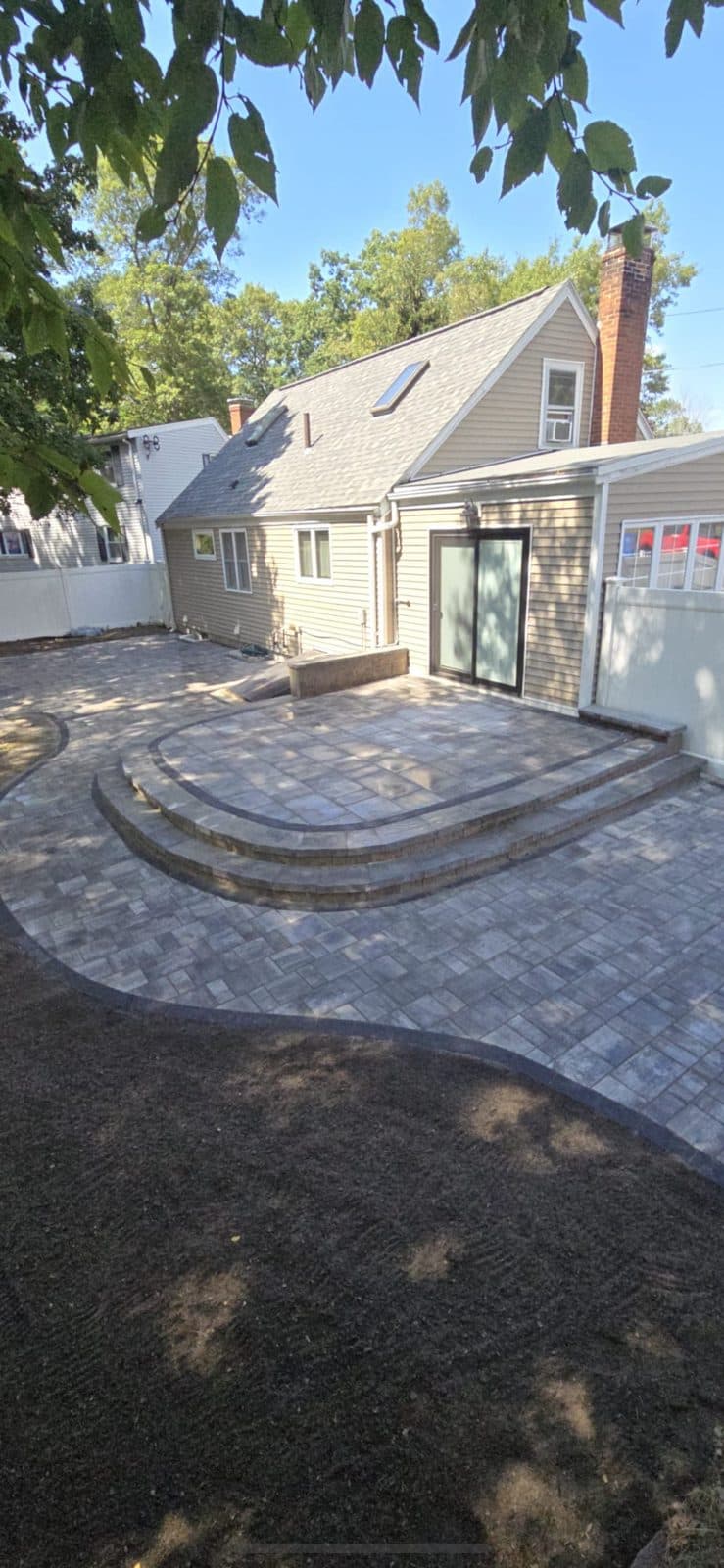
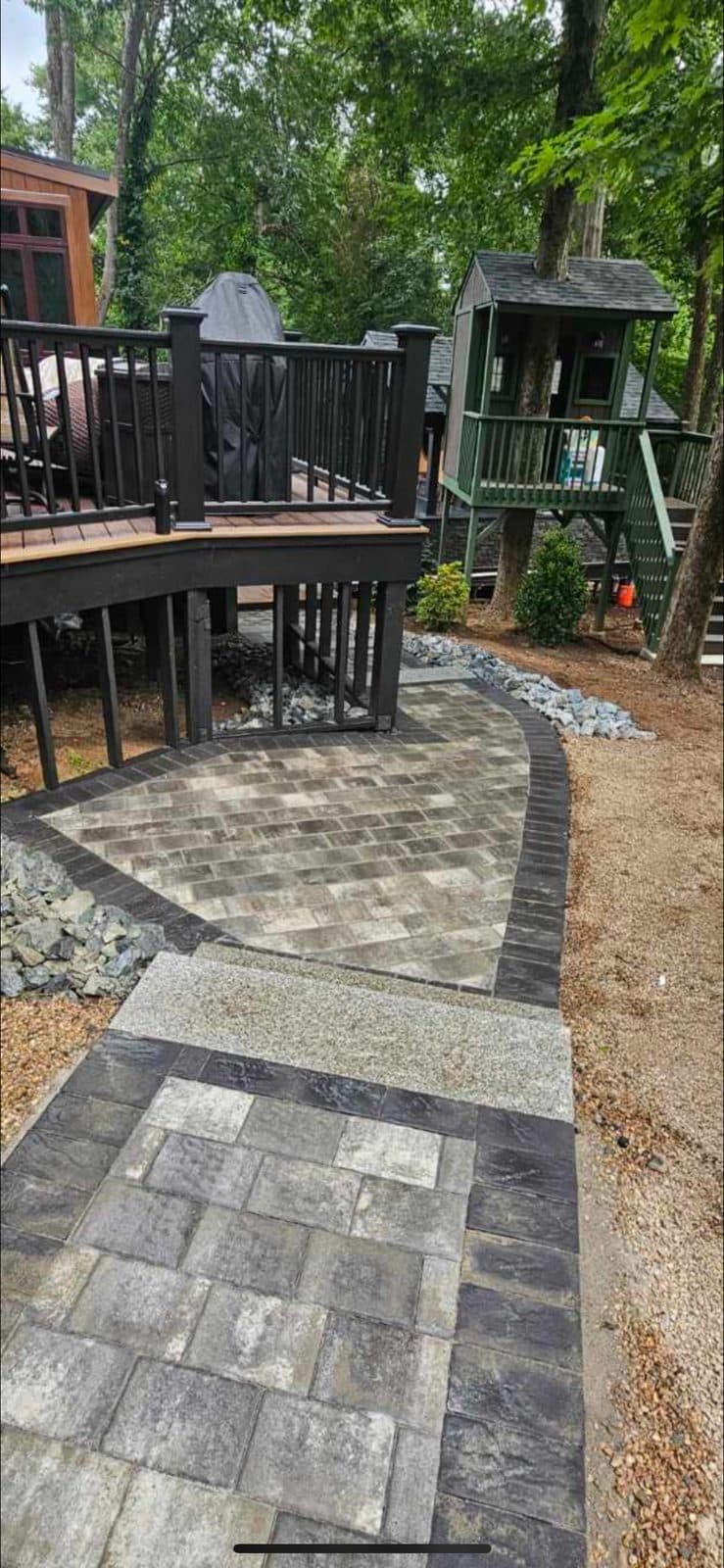
Paver patios, walkways, and retaining walls set on a proper base, plus stonework and outdoor kitchens. Built to still sit level in ten years.