This is the most common question we get on patio work, and the honest answer is that both are legitimate. Poured concrete is not a bad product. It is just a different bet, and in this climate the bet turns on one thing: what happens when the ground underneath moves.
The short comparison
| Pavers | Poured concrete | |
|---|---|---|
| Cost up front | Higher, typically by a meaningful margin | Lower |
| Freeze and thaw | Individual units move independently, so movement shows as settling rather than cracking | A slab is one rigid piece, so ground movement shows up as a crack |
| When it fails | Lift the affected area, correct the base, relay the same pavers | Cracks can be filled but not undone. A bad slab is replaced |
| Repair cost | Small, and localised to the section that moved | Small for a patch, very large for a replacement |
| Look over time | Joints need sand topped up, occasional releveling | Colour fades, cracks widen, patches are visible |
| Best for | Patios, walkways and anything you want to keep looking right for decades | Utility slabs, sheds, budget-driven jobs, large flat areas out of sight |
Why the climate matters more than the material
The Massachusetts State Building Code puts the frost depth for most of the state, Norfolk County included, at 48 inches. That is how far down the ground can freeze here. Water in the soil expands when it freezes and the ground lifts. Come spring it settles back, and not always evenly.
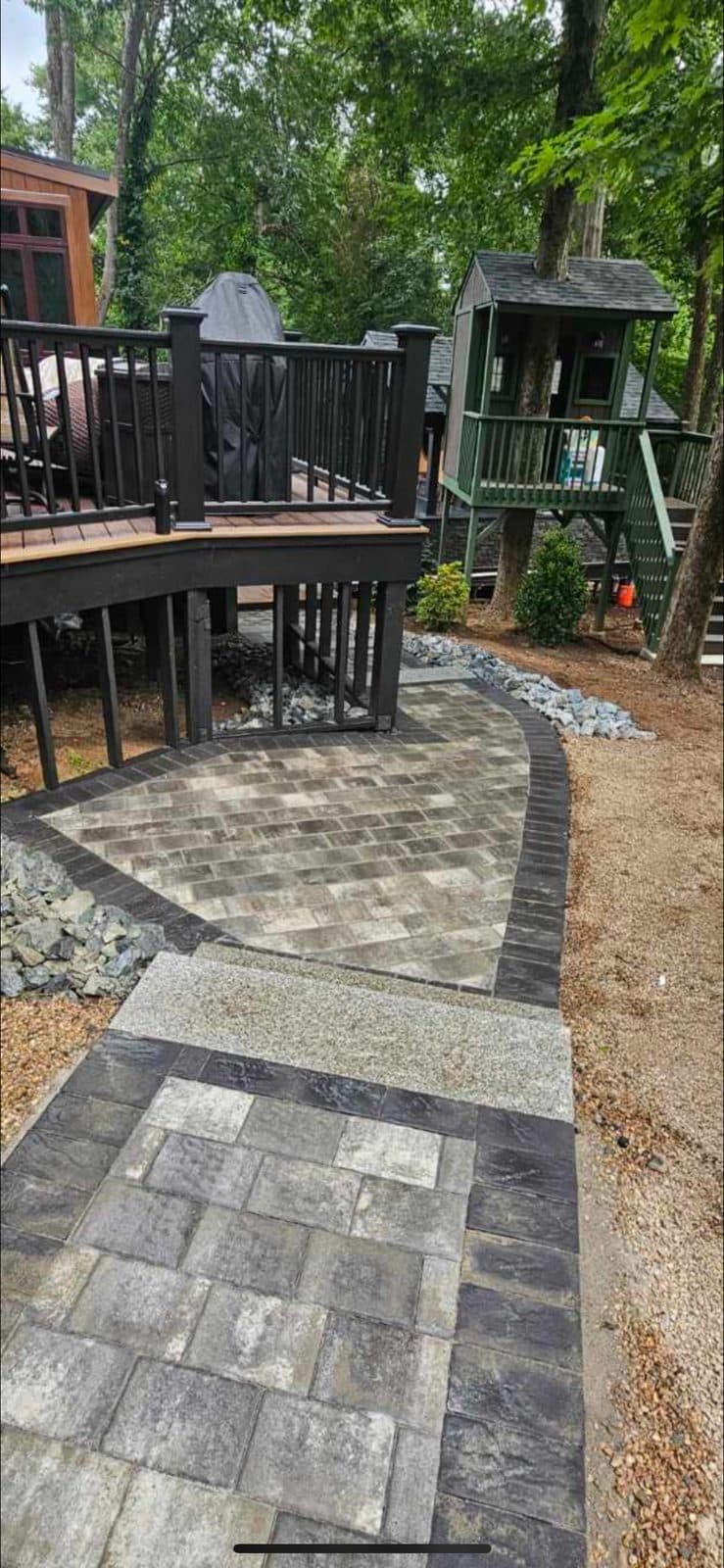
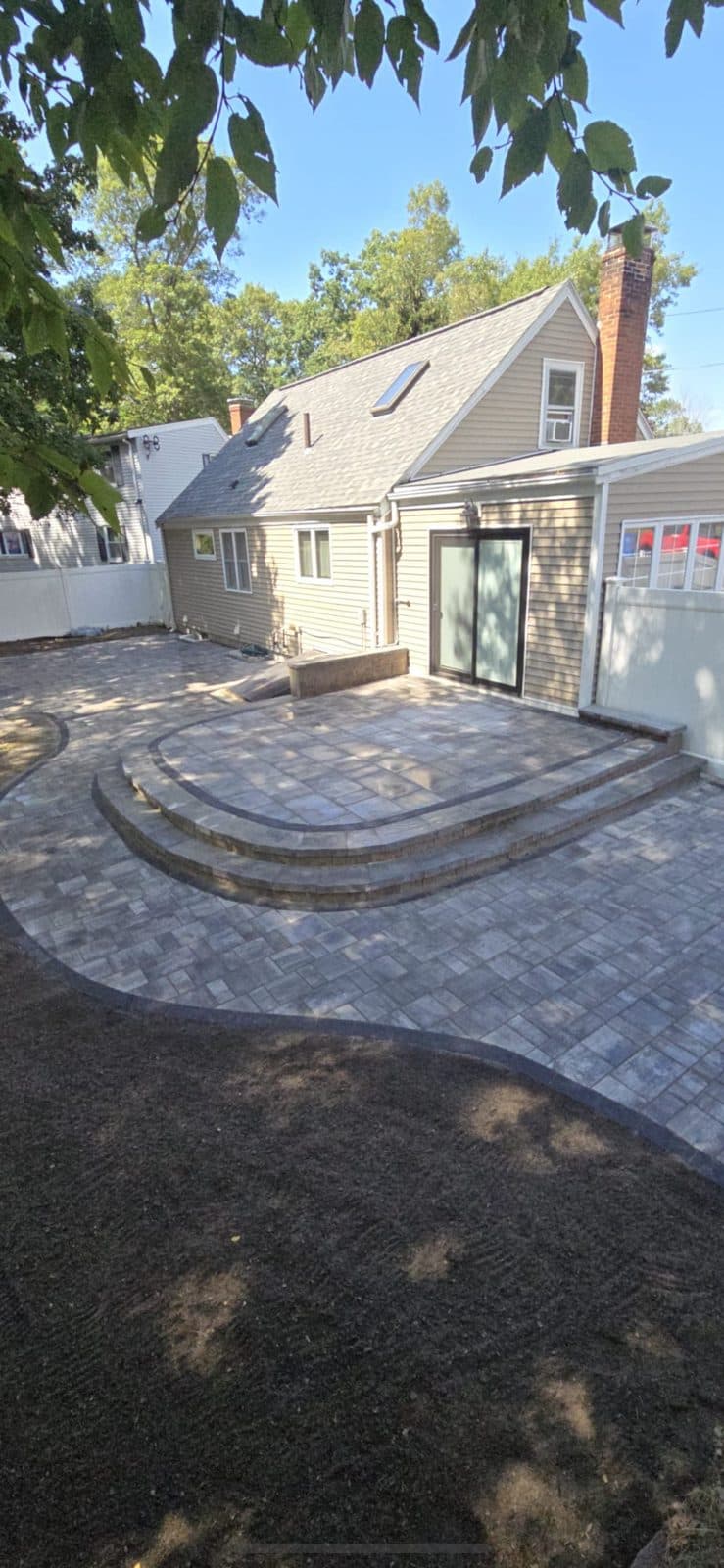
A poured slab has to survive that as a single rigid piece. It usually does for a while, and then one winter it does not, and you have a crack running across your patio that no amount of money makes invisible again. A paver surface is hundreds of separate units sitting on a compacted base. When the ground moves, they move with it, and the failure mode is a low spot rather than a permanent scar.
This is the entire argument, and it is why the price difference narrows the longer you own the property.
Where concrete is genuinely the right call
We will say so when it is. A slab makes sense for a shed pad, a utility area, a large flat surface nobody looks at, or a job where the budget is fixed and the alternative is not doing the work at all. A well-poured slab on a properly prepared base is a real product with a real lifespan.
What we will not do is pour a slab on a base that was not prepared, which is where most of the concrete horror stories come from. The failures people blame on the material are almost always failures of what went underneath it.
The question that actually decides it
How long are you staying? On a property you plan to hold for fifteen years, pavers are the cheaper option measured across those years, because the repair path exists and the surface can be brought back. On a property you are selling in two, the slab may be the sensible spend.
Either way, ask whoever quotes you how deep the base is going and what it is made of. That answer tells you more about the job than the material does.
Hardscaping
Paver patios, walkways, and retaining walls set on a proper base, plus stonework and outdoor kitchens. Built to still sit level in ten years.