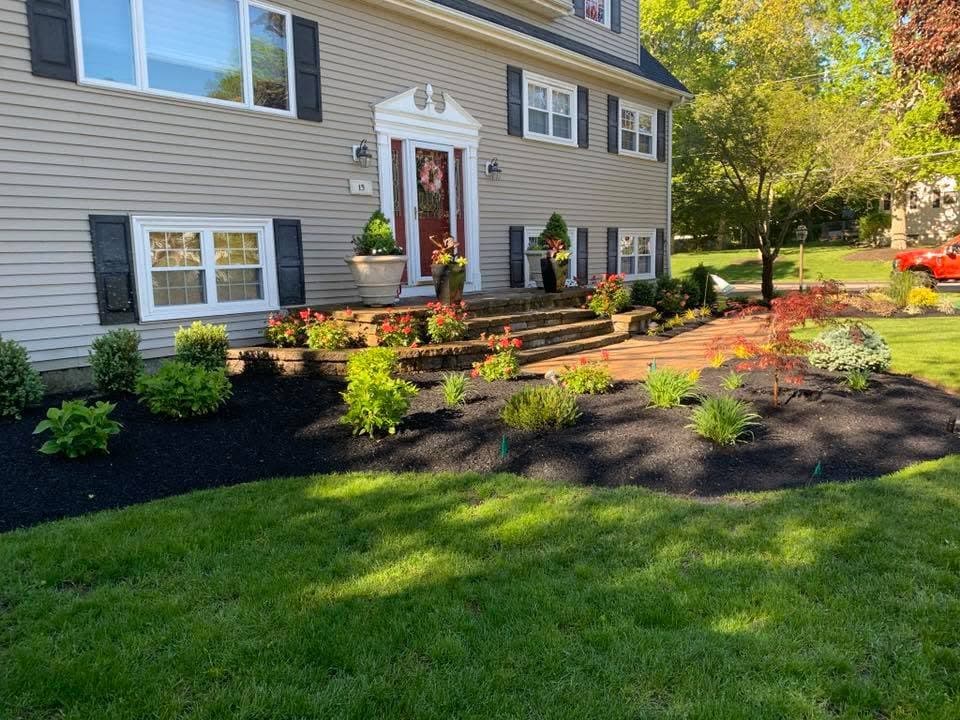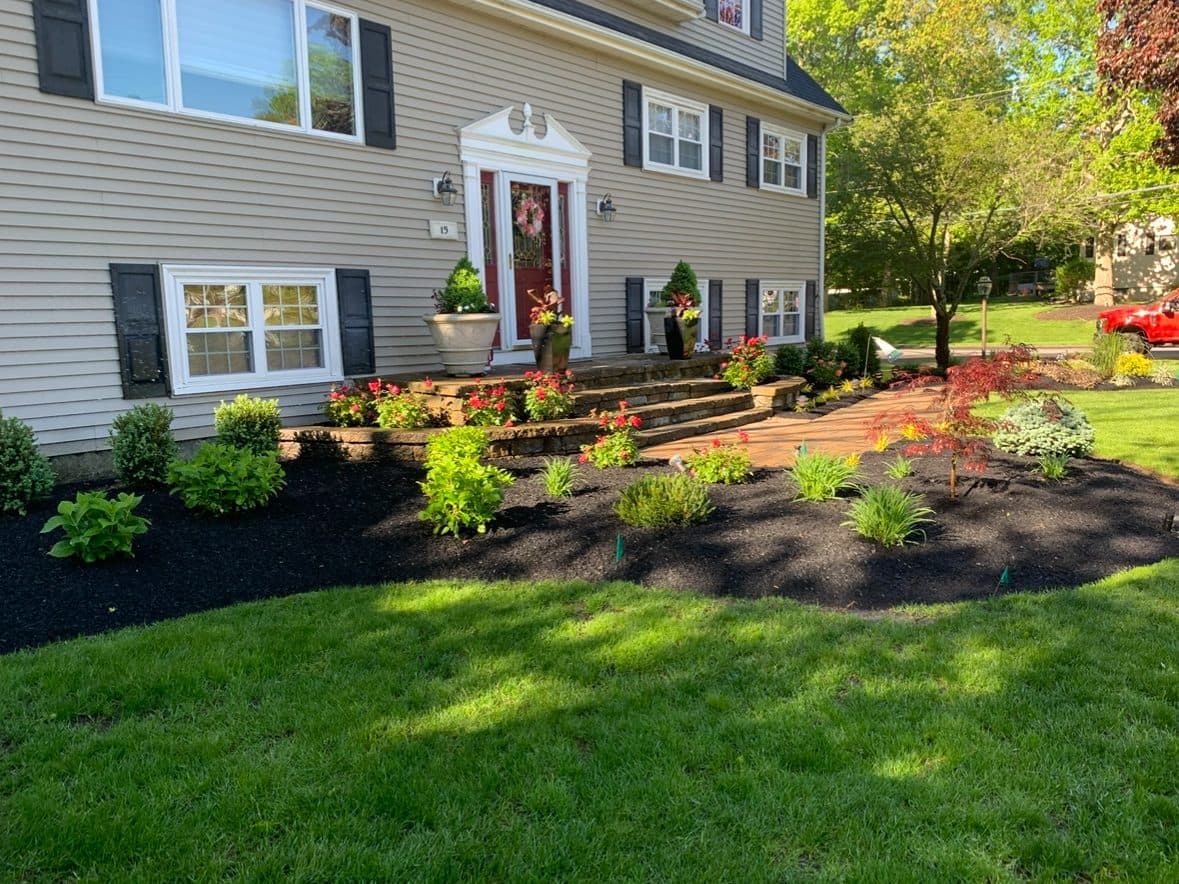
It is one of the most common jobs we look at, especially in towns with older housing stock like Canton and Milton. Foundation shrubs that were the right size for the house in 1975 are now over the windowsills, the fronts have gone woody, and the whole front of the house feels dark.
The instinct is to rip it all out and start again. Sometimes that is right. Usually it is not.
Why renovation is normally the better call
A mature shrub represents twenty or thirty years of growth. Replacing it means buying a young plant, waiting years for it to fill the space, and paying for the removal on top. If the plant is healthy and simply overgrown, cutting it back is faster, cheaper, and gets you a full-looking bed sooner.
What comes back and what does not
Broadly, and there are exceptions on both sides:
- Yew, boxwood, holly, forsythia, lilac, hydrangea and most deciduous shrubs tolerate hard renovation pruning and recover well.
- Junipers, most spruce and pine, and other conifers do not reliably regrow from old bare wood. Cut them past the green growth and the bare part stays bare.
That single distinction decides most of these jobs. A conifer that has gone bare at the base is usually a removal. A yew that has swallowed the front window is usually a two-season recovery.
Renovation takes two seasons, not one afternoon
Cutting a badly overgrown shrub back hard all at once can shock it. The normal approach is staged: take a portion of the oldest wood down in the first year, let it push new growth, then finish the following year. The result is a shrub that is genuinely rejuvenated rather than one that has been shaved into a shape and will look the same again in eighteen months.
This is also why timing matters, and why the honest answer to "can you sort this out next week" is sometimes no. Pruning at the wrong point in the year costs you a season of flowers or, on the wrong plant, the plant.
When to just take it out
If the plant is diseased, if it is genuinely too large for the space no matter how it is cut, or if it is a conifer that has gone bare, removal and replanting is the right money. We will tell you which is which when we walk it, and we would rather save the plant, because that is the cheaper job for you.
Lawn Maintenance
Mowing, edging, and trimming on a fixed schedule, plus bed weeding, shrub trimming, and tree work. Your property looks cared for, not just cut.